
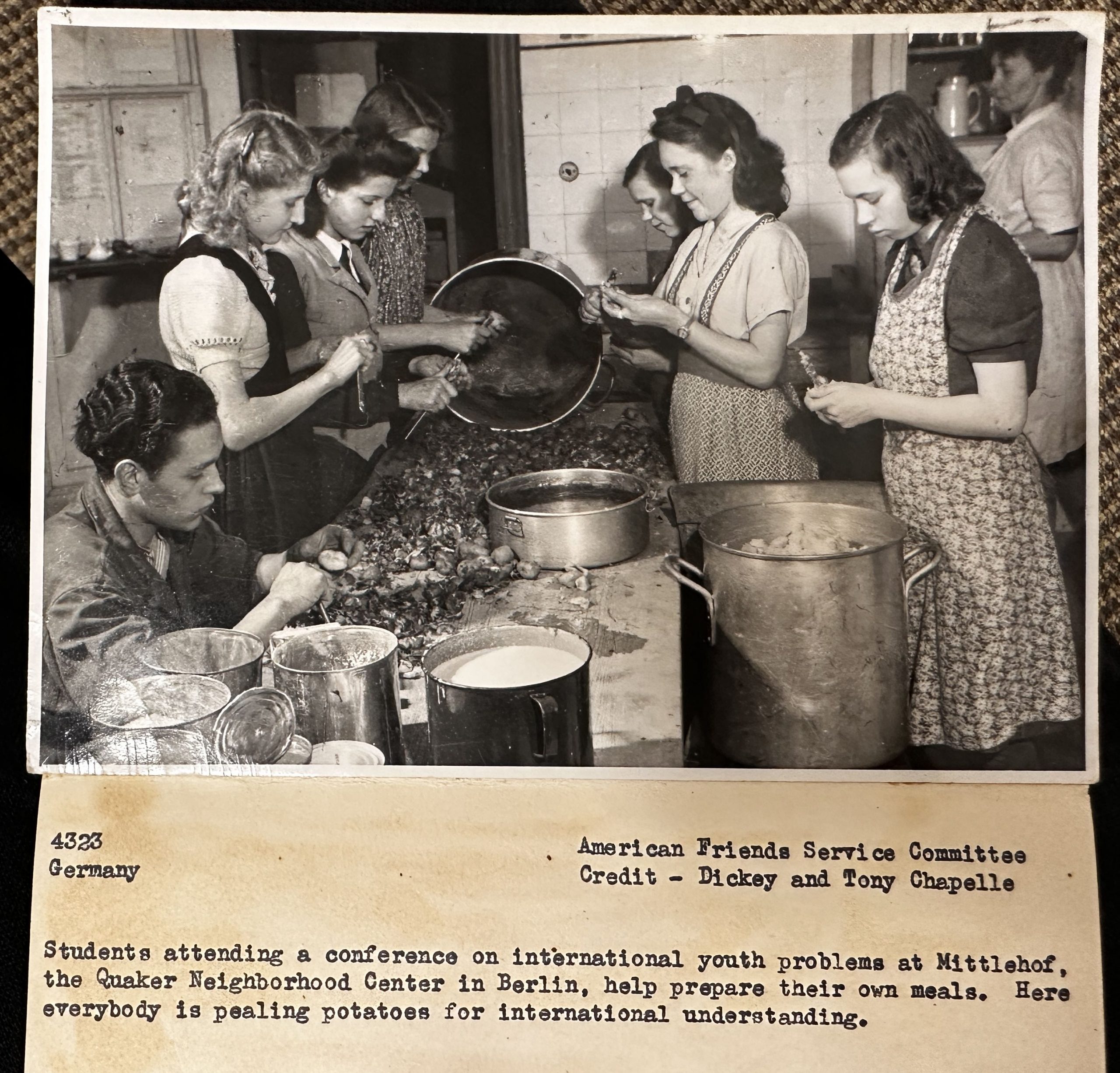
Image credits »© Dickey und Tony Chapelle für das American Friends Service Committee, AFSC Archives/AFSC Photos/Box 33/Germany.
Relief, Reconstruction and Reconciliation. International voluntary agencies in post-war Berlin
When we think of humanitarian aid in post-war Berlin, a single image dominates: the CARE packages that reached the western sectors of the city via the Airlift during the Soviet blockade of 1948/49. But beyond this iconic gesture of support, international assistance to the starving, bombed-out city of Berlin was far more diverse – and has been little researched to date. Alongside the well-known deliveries of food, a whole range of additional international aid organizations were involved in supplying and rebuilding the divided city and in social projects that went far beyond immediate material aid. They responded to the major social challenges of the post-war period by introducing initiatives such as youth clubs, neighborhood centers, meeting places for refugees from the East, and activity groups whose interests ranged from singing songs to discussions about democracy and world peace.
Since October 2024, the Ernst Reuter Archives Foundation has been engaged in a new research project focusing on foreign non-governmental aid organizations and their staff who were active in Berlin during the Allied occupation. The majority of initiatives came from Great Britain, the USA, Sweden, and Switzerland, and were often affiliated with the Red Cross or with protestant faith groups. They were often active in different locations around the world at the same time.
The research project analyses the actors, agencies, and modes of operation of this humanitarian reconstruction aid in Berlin. It also explores the international networks of aid organizations, contemporary trends in welfare work, and the diverse motives for voluntary engagement that found expression in support for Berlin. In this way, the project aims to illuminate a hitherto overlooked dimension of Berlin’s social history after 1945 and contextualize it within the global dynamics of emergency aid and reconstruction through international aid movements.
The aid organizations that sent teams of volunteers to Berlin included the British Friends Relief Service (a Quaker organization with an emphasis on humanitarian aid), the International Voluntary Service for Peace, the Mennonite Central Committee, and the American Friends Service Committee. They all worked together with the military administrations in Berlin as well as with public and independent welfare organizations. The aid organizations were also inter-connected, and their programmatic approaches featured various points of overlap that were linked to broader religious, ideological, and socio-political trends of the time. These intersecting themes included pacifism and anti-militarism, the expansion of ecumenical Christianity, and a commitment to reconciliation, understanding, and international cooperation. In the divided city of Berlin, these themes were particularly explosive due to the strained context of the early Cold War and the influx of refugees from the Soviet Occupation Zone/GDR, but they also held particular relevance in the eyes of many actors who hoped to exert an influence in the Russian occupation zone – which was otherwise virtually inaccessible to them – via Berlin.
Conceived as a doctoral dissertation, the project is being carried out by Nora Kaschuba at the University of Potsdam under the supervision of Prof. Dr. Dominik Geppert. If you have any questions or suggestions, please contact kaschuba@landesarchiv.berlin.de.