
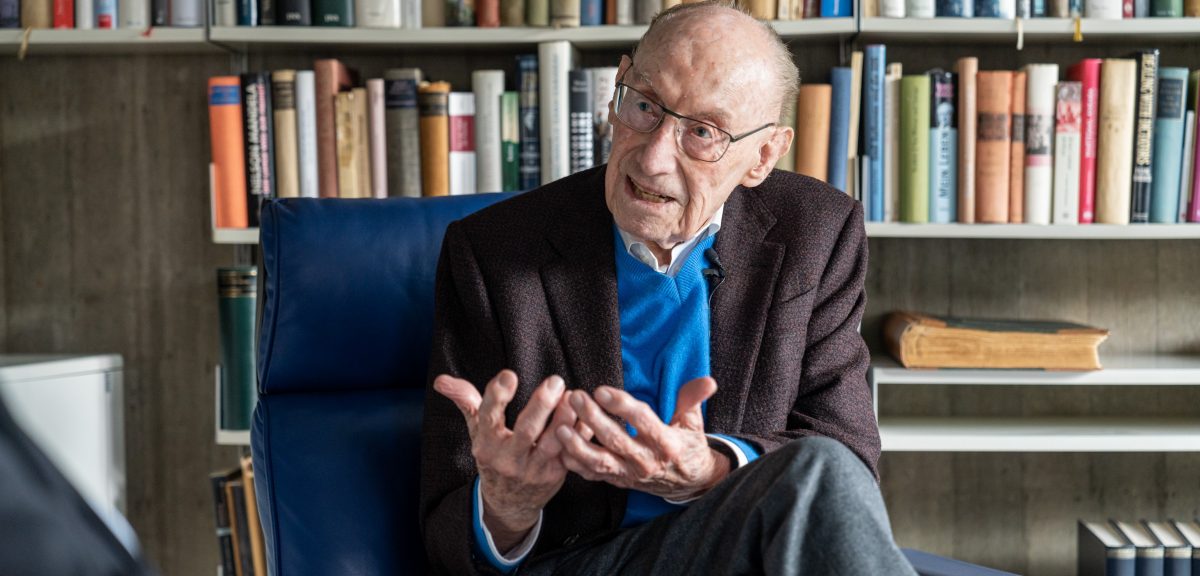
A Short Biography of Edzard Reuter – by Bernhard Dietz
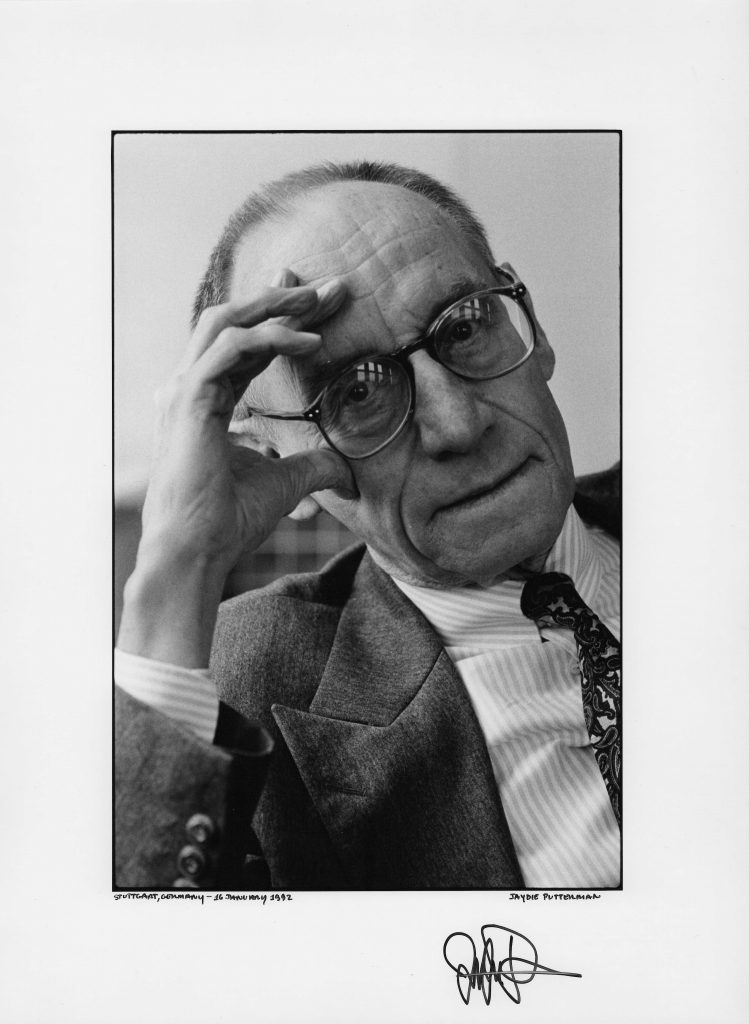
Image credits »© Jaydie Putterman, https://www.jaydieputterman-photography.com/.
Edzard Reuter – A Life Through a Century
Throughout his lifetime, Edzard Reuter was both influenced by and helped to shape a dramatic century.”. Born in Berlin during the ‘Golden Twenties’, he was driven into exile with his family by the National Socialists in 1935. He eventually returned to Germany after the Second World War, experiencing the Berlin blockade and the onset of the Cold War first hand. At this time, he threw himself into his first professional roles with Universum Film AG (UfA) and Bertelsmann, before rising through the ranks at Daimler-Benz at a meteoric pace in the 1960s and 1970s. After reaching the pinnacle of the company’s hierarchy, he took the helm as Chief Executive, leaving a decisive mark on Germany’s largest industrial enterprise.
This period saw both the reunification of Germany and fundamental transformations in the German economy: the first steps towards globalisation and the gradual dissolution of ‘Deutschland AG’, the network of industrial businesses and major banks that had marked Germany’s economic culture for many decades. Edzard Reuter was thus a central figure in the transition from the old model of ‘Rhenish capitalism’ to globalisation and a new focus on capital markets. Yet Reuter was no ordinary manager; with his background, talents, and interests, he was a multifaceted and at times contradictory business leader. He was also a loyal Social Democrat, a critical intellectual, a charismatic patron of culture, and a celebrated media personality. In the final decades of his long life, he emerged as an outspoken critic of neoliberalism, advocated for caps on executive pay, and urged the business elite to accept greater responsibility for the common good and Germany’s social market economy
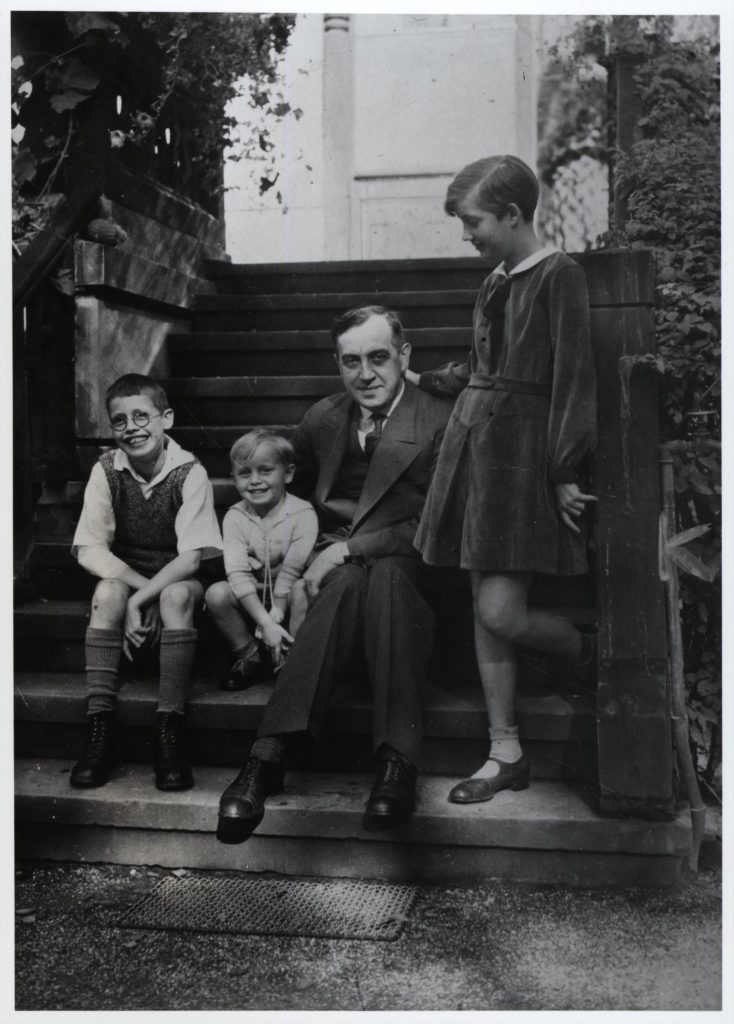
Image credits »© Landesarchiv Berlin, F Rep. 290 (04), No. 0129607.
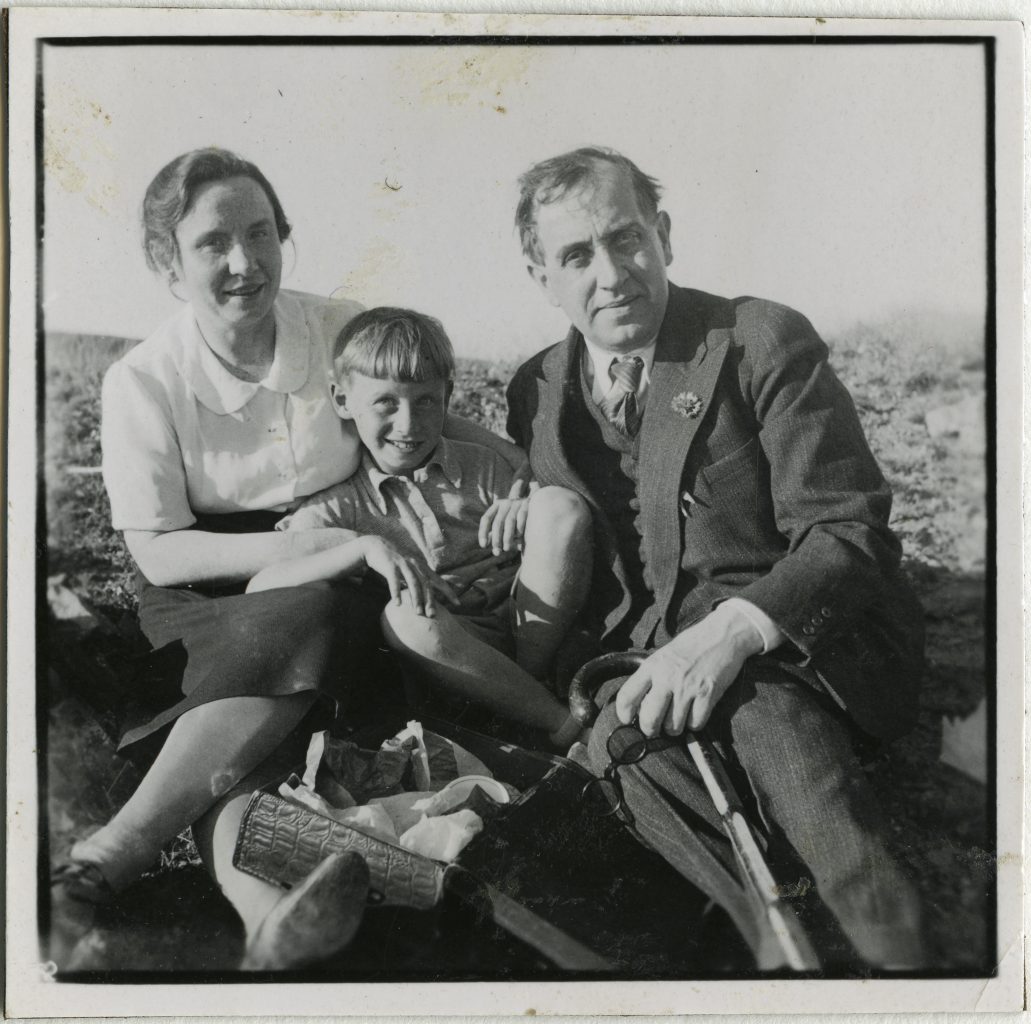
Image credits »© SERA, Album 1, image 239.
Edzard Reuter and Ernst Reuter
The biography of Edzard Reuter was strongly shaped by his famous father, Ernst Reuter. Even when he had become a well-known business leader in his own right, no profile of him was complete without the description “the son of…”. Edzard Reuter never rebelled against this label, however, but remained committed to preserving his father’s memory and maintaining his political legacy throughout his life. Even his childhood was decisively influenced by his father’s career and political fortunes.
Edzard was born in Berlin on 16 February 1928 to Ernst and Hanna Reuter. His slightly unusual Frisian name was chosen in memory of his father’s younger brother, who died in 1919 of injuries sustained during the First World War. Edzard grew up in a Social-Democratic and middle-class household. His father came from the Protestant, educated middle class while his mother, Hanna Reuter, was from a Catholic, lower-middle-class background. His parents met in the urban milieu of the Social Democratic intelligentsia while they were both working for the party newspaper of the SPD (Social Democratic Party of Germany), Vorwärts.
Edzard’s parents were kind-hearted people who loved and cared deeply for their youngest (and, in the case of Hanna, only) child. Yet his childhood was by no means sheltered, and his early years were characterised by upheaval. Three years after Edzard’s birth, the family moved to Magdeburg, where Ernst Reuter had become Lord Mayor. The rise to power of the National Socialists in 1933 was a catastrophe for the Reuters. Ernst Reuter was removed from office as Lord Mayor and twice placed in Lichtenburg concentration camp, where he was subjected to terrible abuse. For the young Edzard, his father’s imprisonments were extremely traumatic, fundamentally shaking his childhood need for security and a sense of home. When the Gestapo came to take away his father for the second time in June 1934, the young Edzard reportedly wept, stamped his feet in despair, and shouted: “Those damned Nazis”.
After his release from the concentration camp, Ernst Reuter managed to flee Germany and emigrate with his family to Ankara, the city in Central Anatolia chosen by the founder of the Turkish Republic, Kemal Atatürk, to be the political centre of the new Turkey (now Türkiye). Ernst Reuter initially worked as a local government administration expert in Turkish ministries and later taught urban planning at the Ankara School of Public Administration. Regular working hours meant that he could spend more time looking after his son than he had done in Germany. “He is a dear companion to me, and we get on so well”, Ernst wrote to his mother in 1936.
As he earned a relatively good income, the Reuters could afford a comfortable lifestyle. Edzard was privately educated, which was in any case a necessity: as an exile, he would not have been accepted at the German Embassy’s School. Edzard made friends with the neighbourhood children in no time at all, as only children of that age can. Language barriers and religious or cultural differences were immaterial. Edzard learned the local language at an exceptional speed. “He speaks Turkish better than his Daddy, and if you were to hear him playing outside you would not know whether he spoke German or Turkish better or faster”, Hanna wrote to a friend.
The Reuters remained in Turkish exile for almost twelve years. For Edzard, this was a thoroughly happy time. He enjoyed the attention of his father and life in Ankara was a big adventure offering freedoms that were unusual for a child of his age. He was spared the rigid educational system of National Socialism with its ideological indoctrination and militaristic ideals of masculinity. Instead, his experiences in exile fostered cultural openness, religious tolerance, and a curiosity for the unfamiliar – qualities that set him apart from many of his peers back home.
The family returned to Germany after the end of the Second World War, in late 1946. In June 1947, Edzard’s father was elected Lord Mayor of Berlin by the City Assembly but was initially unable to take up office due to Soviet objections. In the same year, Edzard began studying maths and theoretical physics at the Humboldt University in Berlin. He later switched to study law at the Free University of Berlin from 1949 to 1952. He passed the state law examination in 1955.
Two years previously, in September 1953, Ernst Reuter had died following a heart attack. Having embodied West Berlin’s spirit of resistance since 1948 as Lord Mayor, he was a lifelong role model for Edzard, due not only to his politics and ethics but above all thanks to his sense of duty and unwavering ideals of freedom. His father had undoubtedly set a high moral bar, which he had upheld with dignity and true heroism even during his time as a concentration camp prisoner.
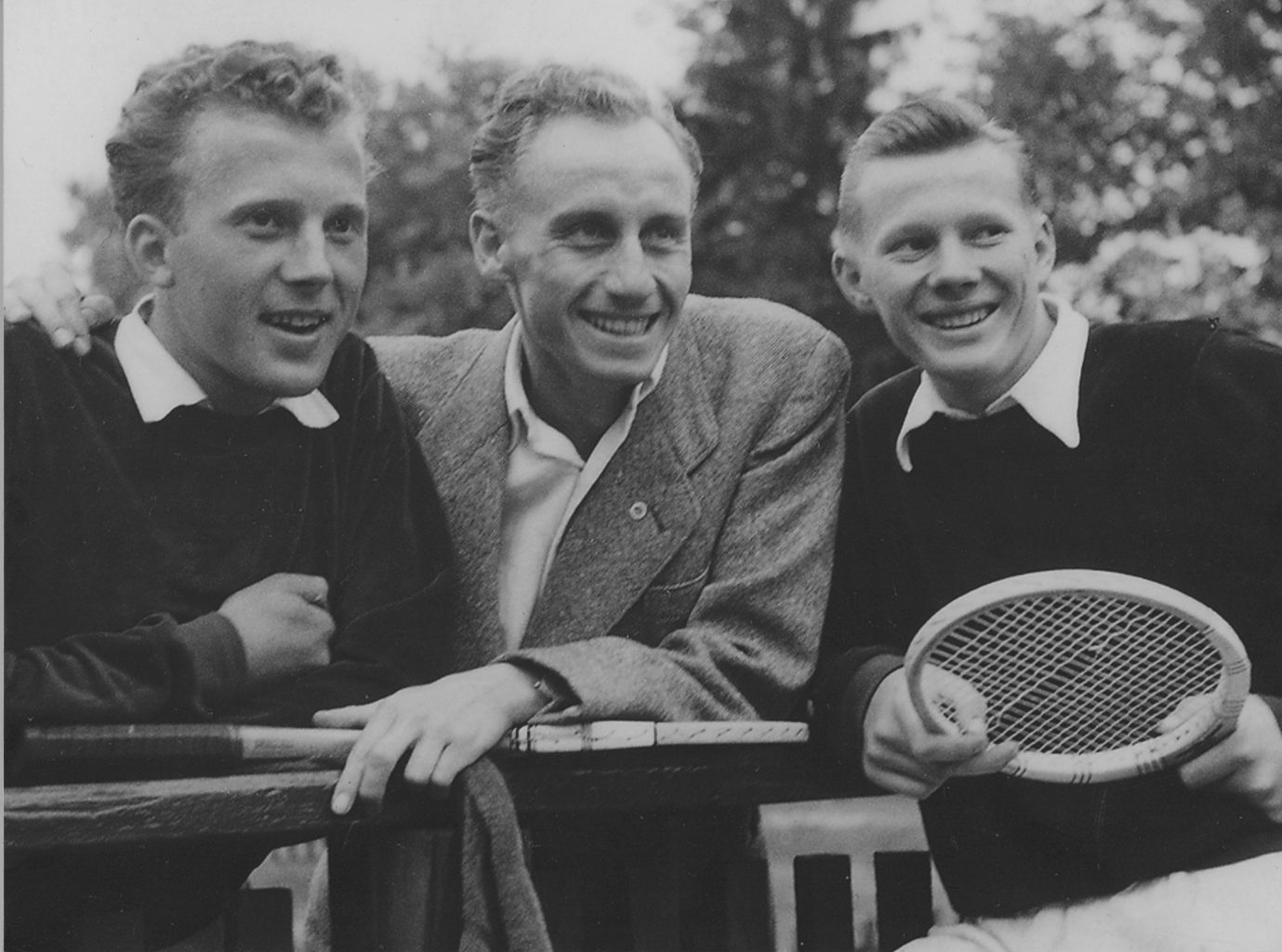
Image credits »© SERA/Edzard Reuter estate (We have made every effort to provide detailed copyright attributions. Despite extensive research, it has not been possible to establish the authorship beyond doubt in this case. Please contact us if necessary at sera@landesarchiv.berlin.de).
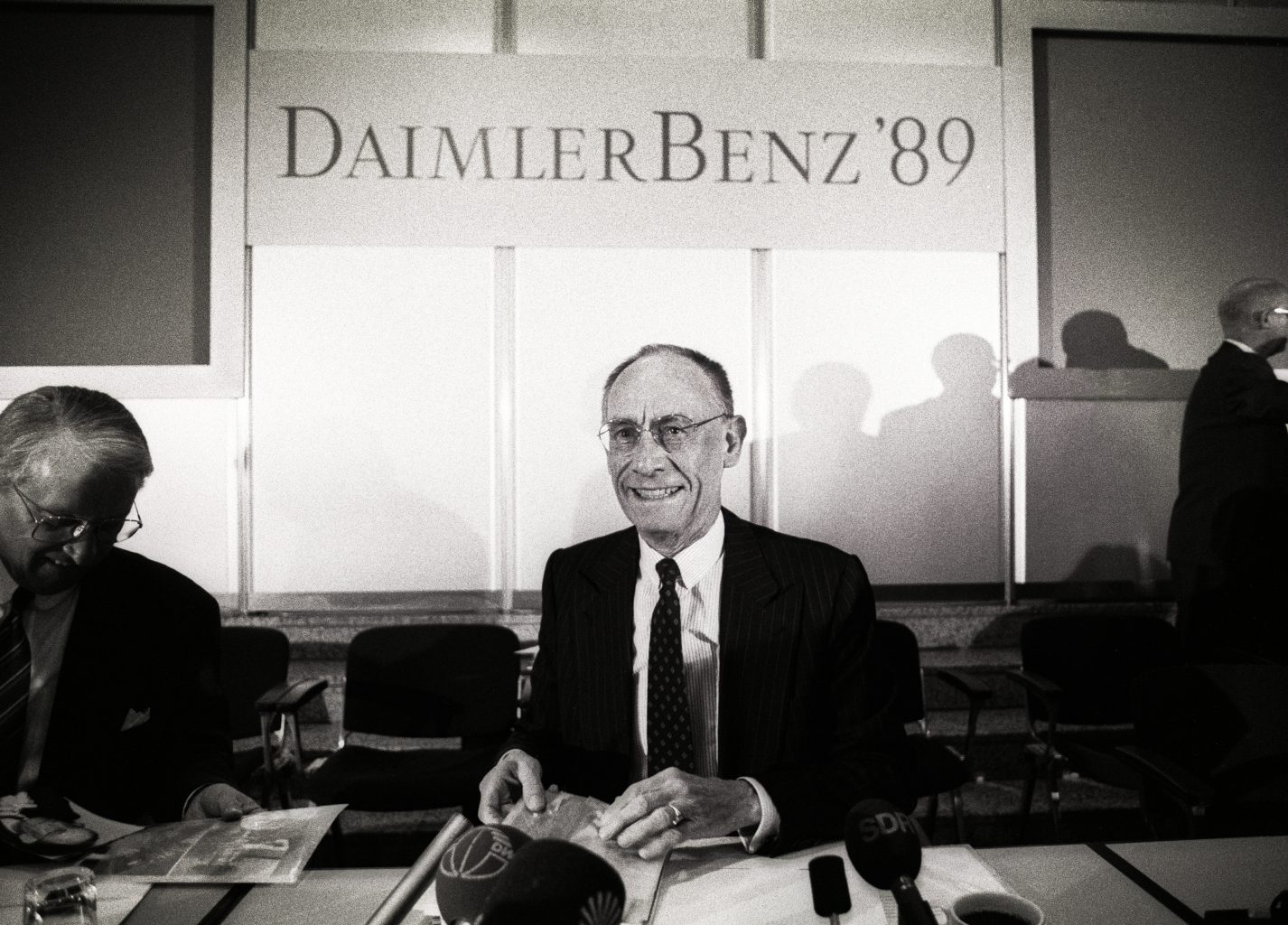
Image credits »© ullstein bild, No. 07939990.
Edzard Reuter and Daimler-Benz
Following his first professional experiences with UfA and Bertelsmann AG, in March 1964 Edzard Reuter began his career with the Stuttgart-based automobile group Daimler-Benz. Ironically, his appointment was secured by the former Nazi activist and SS-Untersturmführer Hanns Martin Schleyer, who was serving as the company’s head of personnel at the time. Edzard’s first contact with the company, including a job interview, had been back in 1956. Thanks to his left-wing father and his own SPD party membership, however, his initial recruitment had met with considerable resistance and Reuter had been rejected. This second attempt was more successful, and he was appointed as an assistant to Joachim Zahn (who would later become Chief Executive) with a starting monthly salary of 3,250 Marks.
That Reuter did not feel entirely at ease, despite now having a secure professional future in a company whose products he admired but whose past frightened him, is evident from a letter to the Austrian-Jewish writer Heinz Carwin from 1965: “On top of that, here at the company in Stuttgart, the boss is an old Nazi – not one of the rowdy sort, but blessed with that familiar pseudo-intellect and adaptability that qualifies him for admission to the exclusive club of German managers. It’s often unbearable!”
But Reuter managed to bear the situation and quickly rose through the ranks within the company. In 1966 he became a head of department and in 1971 he was appointed to lead the Corporate Planning and Organisation division. He became a deputy member of the executive board in 1973 and a full member in 1976. He took over responsibility for finance and business administration in 1980 and was by then widely regarded as a candidate for the company’s top leadership position.
It is a myth that Edzard Reuter managed to achieve this ascent despite his party membership of the SPD. Indeed, as works councils grew in strength and co-determination rights were expanded, the company’s management in the 1970s was aware of the advantages of having an employee-friendly figure on the executive board. Only when it came to his ascent to the very top of the company’s hierarchy was his party membership initially an obstacle.
When Gerhard Prinz, chair of the executive board, died on 29 October 1983, Reuter’s time seemed to have come. But political reservations were expressed against him – both within the company and (in particular) on the supervisory board, which was dominated by Deutsche Bank. The magazine Der Spiegel commented: “The son of the former Governing Mayor of Berlin, Ernst Reuter, is a Social Democrat like his father. But it is more likely that the Green Party’s Joschka Fischer will become Chancellor of the Federal Republic than that the ruling industrial clique will allow a Social Democrat to occupy what is perhaps the most prestigious executive chair in German business.”
Yet even Der Spiegel can be wrong: in 1987, Edzard Reuter was appointed first deputy chairman and then sole chairman of the executive board of Daimler-Benz. Alfred Herrhausen, the new spokesperson of Deutsche Bank’s executive board – and now also chair of the supervisory board of Daimler-Benz – was instrumental in this appointment. After Hanns Martin Schleyer, Herrhausen became the most important patron of Edzard Reuter’s career (and was, like Schleyer, murdered by the Red Army Faction, or RAF). With Herrhausen’s backing, Reuter was able to push ahead with the vision he had already begun to develop of Daimler-Benz as an “integrated technology company” with a global presence. Faced with signs of market saturation in the automotive sector, new competition from Japan and Korea in the luxury segment, and stricter environmental standards, Reuter did not want the company to concentrate solely on one key area of business. Instead, he sought to broaden and diversify the group through acquisitions.
The goal was to make the group less dependent on the automobile business and better prepared for the future through easier access to key technologies such as electronics and aerospace. At the same time, technological synergies would pave the way for the automobile of the future. “There is no way back to the days of the comparatively small Swabian company with its products that everyone desired,” Reuter told his executives in a speech in early 1988. By this time, Daimler had already acquired the electronics company AEG and the aerospace group Dornier. In addition, it had acquired 50% stakes in MAN and the engine manufacturer MTU. In 1989, the defence contractor Messerschmitt-Bölkow-Blohm was also taken over.
The restructuring transformed Daimler into a huge conglomerate, but one that initially generated little but losses. Additionally, the company found itself faced with a more critical public. Matters were not helped by the fact that the company’s problematic reckoning of its own involvement in the Nazi forced-labour system coincided with its expansion into the arms industry as a new line of business. Above all, however, the cultural shift away from the automobile sector earned Reuter many enemies within the company. His departure from the top of the corporation in 1995 was turbulent. After handing over the role of Chief Executive to his successor, Jürgen Schrempp, Reuter initially moved to the company’s supervisory board but resigned again only a few months later. His strategy of an “integrated technology company” was regarded as a failure and subsequently dismantled. In the media, Reuter was depicted as a “high-flyer” and an “intellectual dreamer” who had “lost touch with the shop floor.”
His autobiography, published in 1998, is largely a justification of his vision and simultaneously a reckoning with his former employer: “To this day, I wonder whether a company like Daimler-Benz was truly ready, both internally and externally, for the path we had decided to take.” Perhaps Reuter really was ahead of his time. From today’s perspective, his move away from an identity-based fixation on gas-powered cars seems more relevant than ever. We are now also painfully aware that the dramatic fall in demand for armaments in the early 1990s was the result of a unique historical situation rather than a permanent trend.
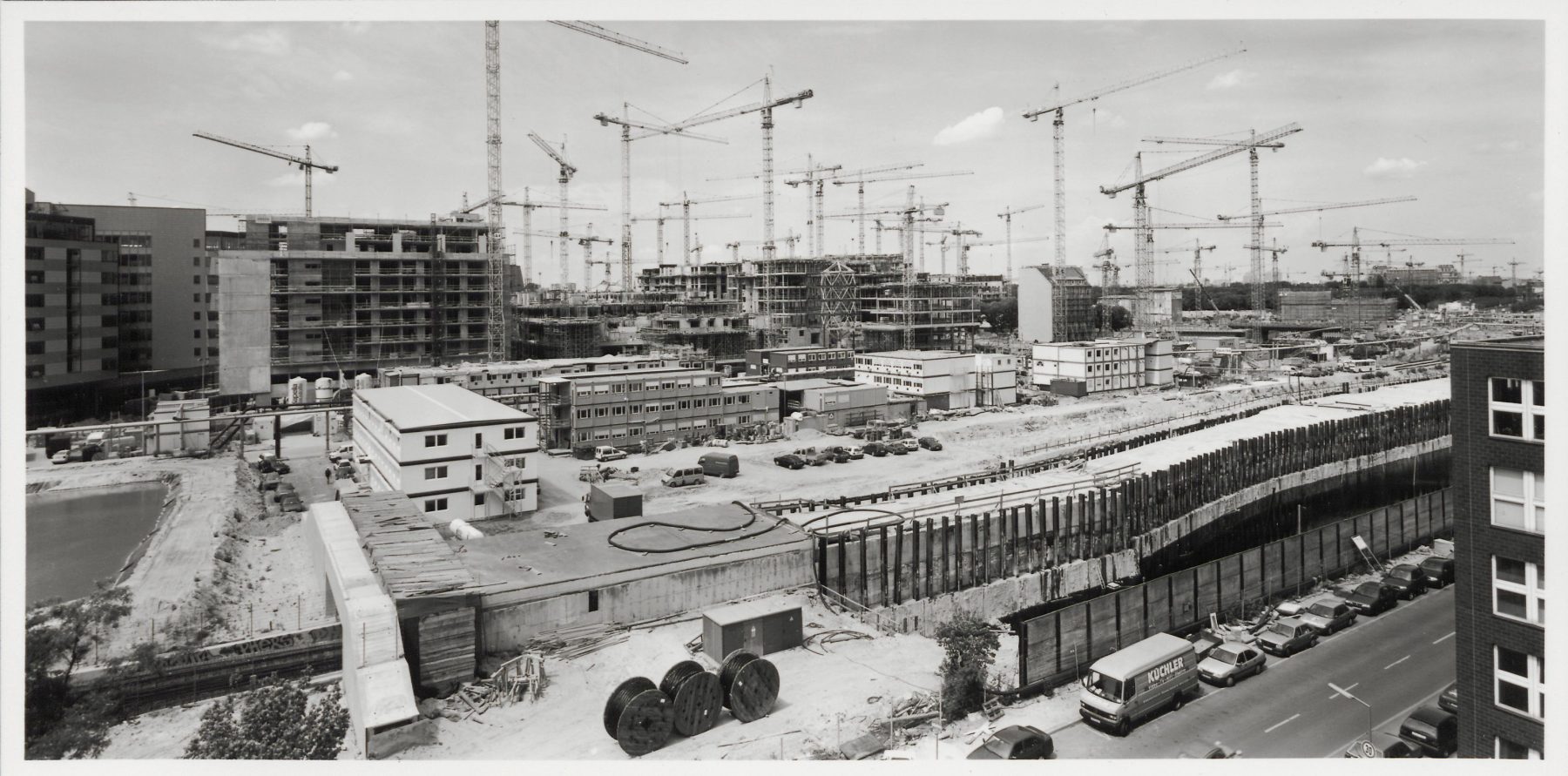
Image credits »© Landesarchiv Berlin, F Rep. 290 (01), No. 0391103 (Photo: Edmund Kasperski).
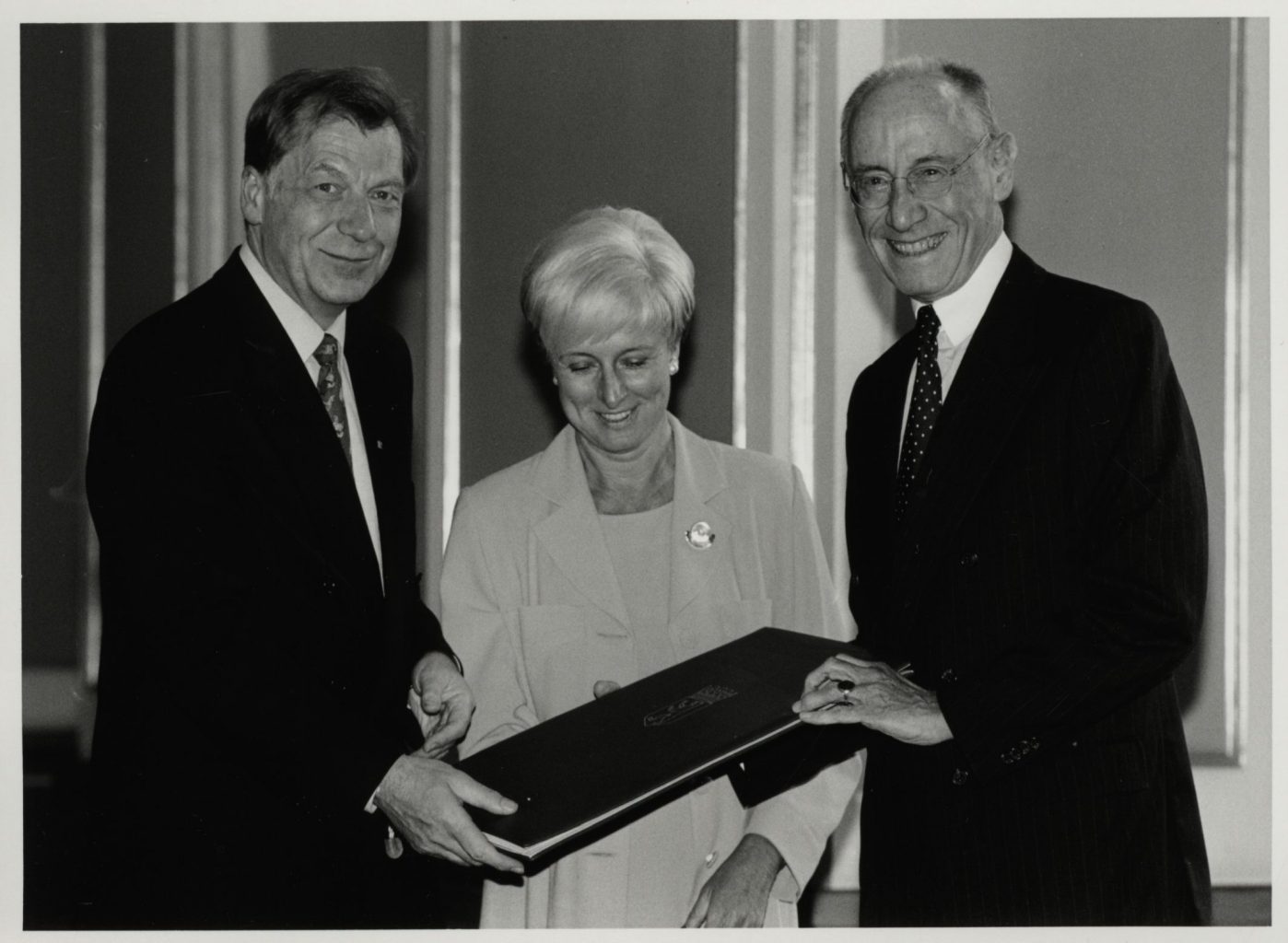
Image credits »© Landesarchiv Berlin, F Rep. 290 (06), No. 0396704 (Photo: Barbara Esch-Marowski).
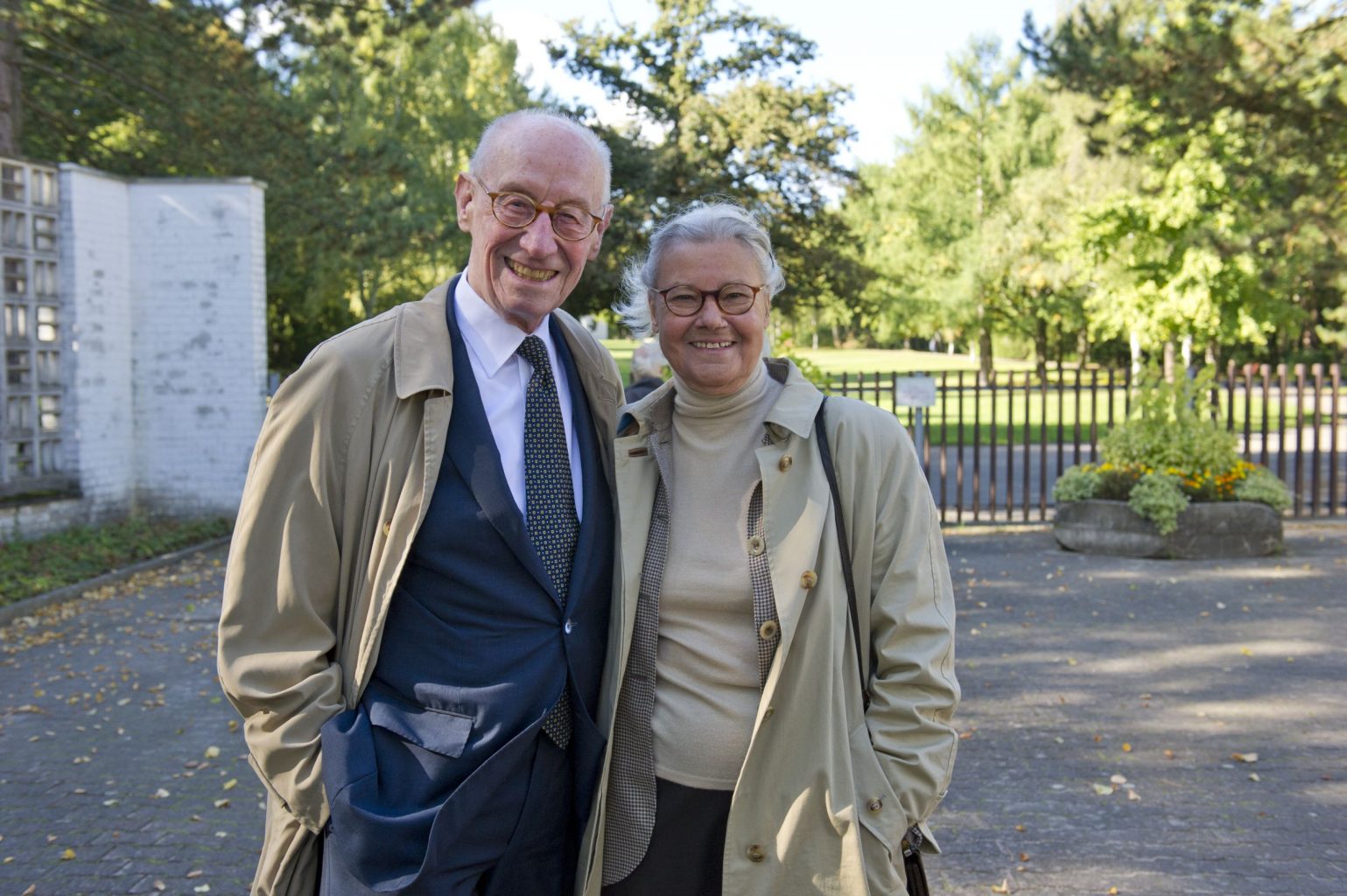
Image credits »© Landesarchiv Berlin, F Rep. 290-11-02, No. D_005060 F Rep. 290-11-02 (Photo: Thomas Platow).
Edzard Reuter and Berlin
Edzard Reuter lived in Stuttgart for 60 years, but Berlin always remained his true home. There he was active in many ways as a patron, benefactor, and tireless champion of the memory of Ernst Reuter. He exerted his greatest influence on the development of his birthplace in the 1990s, however, when he played a decisive role in shaping the new centre of the reunified city, becoming known as the ‘architect’ of Potsdamer Platz.
This commitment began even before the fall of the Berlin Wall. At the start of 1986, one year before he was elected Chief Executive of Daimler-Benz, Edzard Reuter gave the opening address for the anniversary exhibition “Mobile World”. The event, held in Berlin, was planned to celebrate the 100th birthday of the automobile. But that was not all: “It should demonstrate one thing above all: the bond between Daimler-Benz and this city, and our belief that one can only be a good German and a patriot in the rational sense of the word if one bears the following question in mind at all times: what can I do to help provide Berlin with a secure and sufficient economic foundation?”
This quotation, imbued with the spirit of freedom and perseverance that characterised the period of the Berlin Blockade, embodies the legacy of his father, who was at the time regarded as “the most important voice of the people of Berlin for freedom and democracy”. This “airlift mentality” provided the ideological conditions for major investment by Daimler-Benz in Berlin towards the end of the 1980s.
More important, however, were structural changes within the company’s organisation in Stuttgart. Daimler was no longer purely a car manufacturer, but – thanks to Edzard Reuter’s strategy of an “integrated technology group” – a conglomerate. This also included ‘debis’ (‘Daimler-Benz InterServices’), which offered a wide range of services. In 1989, the Stuttgart-based company set out to find a location for this new subsidiary.
After initial contact between Daimler and the Governing Mayor, Walter Momper, late in the summer of 1989, the Berlin Senate offered three sites for investment: the Klingelhöfer Triangle, the Lenné Triangle, and Potsdamer Platz. The fall of the Wall gave the negotiations a new direction. Chief Executive Reuter now argued strongly in favour of Potsdamer Platz, even though the site offered for sale was significantly too large for the original plans. On 13 February 1990, the Executive Board of Daimler-Benz AG approved the acquisition of the Potsdamer Platz site in principle. Walter Momper called this a “decision of the century”.
Hopes for West Berlin as an industrial hub thus gave way to visions of a new centre for a reunified Germany, a new Berlin, which was to be reborn in the wasteland between East and West. In the spring of 1990, however, when Daimler’s plans to purchase the site became known, Potsdamer Platz became the subject of intense and heated debate. This continued throughout the 1990s, with varying trends and themes, until the inauguration of the Sony Centre in the summer of 2000. As Potsdamer Platz held almost unique significance as a focal point of contemporary German history, the discussions repeatedly touched upon questions of German identity. The empty square became a gigantic canvas onto which the historic new beginning of reunified Berlin was projected.
For Edzard Reuter and Daimler-Benz, Potsdamer Platz was a great success in the 1990s. Reuter was able to exert a strong influence over urban planning and architecture questions, thanks in no small part to his connections within Berlin’s political circles and to the financial clout of the company behind him. At the same time, the company could prove that it was able to manage a mega-construction site of logistical and financial superlatives and that it had become a successful property developer. Not all Berliners were happy about this. Yet the city showed its gratitude: in 1998, the year Potsdamer Platz opened, Edzard Reuter was made an honorary citizen of Berlin in recognition of his services to the city.
Berlin remained the centre of his civic engagement. It was here in 1995 that, together with his wife, he founded the Helga and Edzard Reuter Foundation, which recognised social and political commitment to integration, cultural exchange, and international understanding. Reuter also championed architecture and art (as Chair of the Association for the Promotion of the Bauhaus Archive, for example) and was committed to promoting a culture of remembrance (including through his involvement with the Memorial to the Murdered Jews of Europe). The commemoration of his father eventually culminated in the Ernst Reuter Foundation, which was co-founded and decisively shaped by Edzard Reuter in Berlin in 2010. On 27 October 2024, Edzard Reuter died at the age of 96 in Stuttgart. His honorary citizenship of Berlin enabled a special kind of reunion: together with his wife Helga, who died three weeks after him, Reuter was buried in Zehlendorf Forest Cemetery. Here, as an honorary citizen of the city of Berlin, he rests alongside Willy Brandt and his father, Ernst Reuter.
↑ Image credits Headerimage© André Wunstorf/LAB.